GNAW-BODY INDEX
Single channel CGI video, Stereo sound
Full HD. 1920x1080p
[15:00 loop]
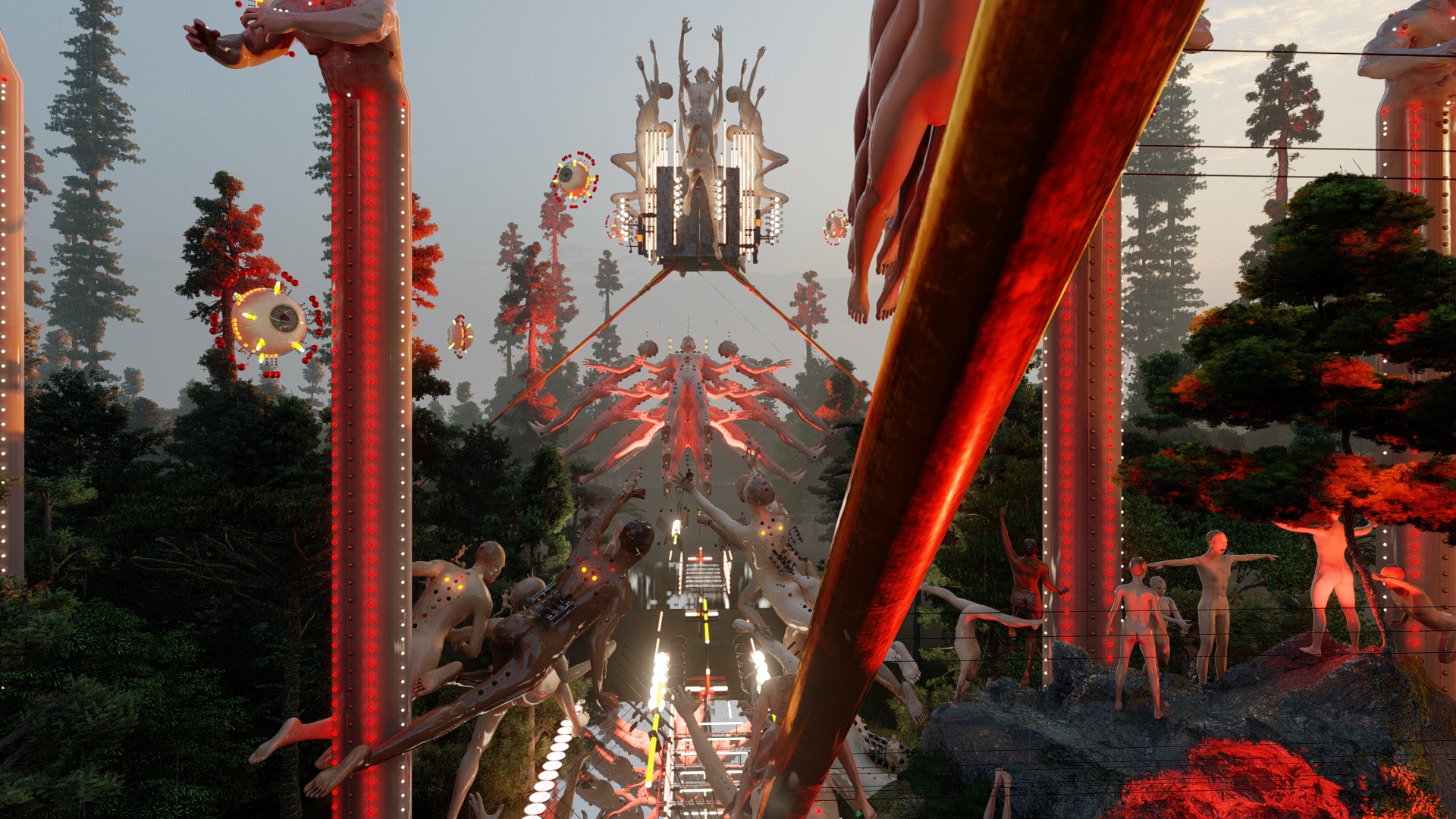
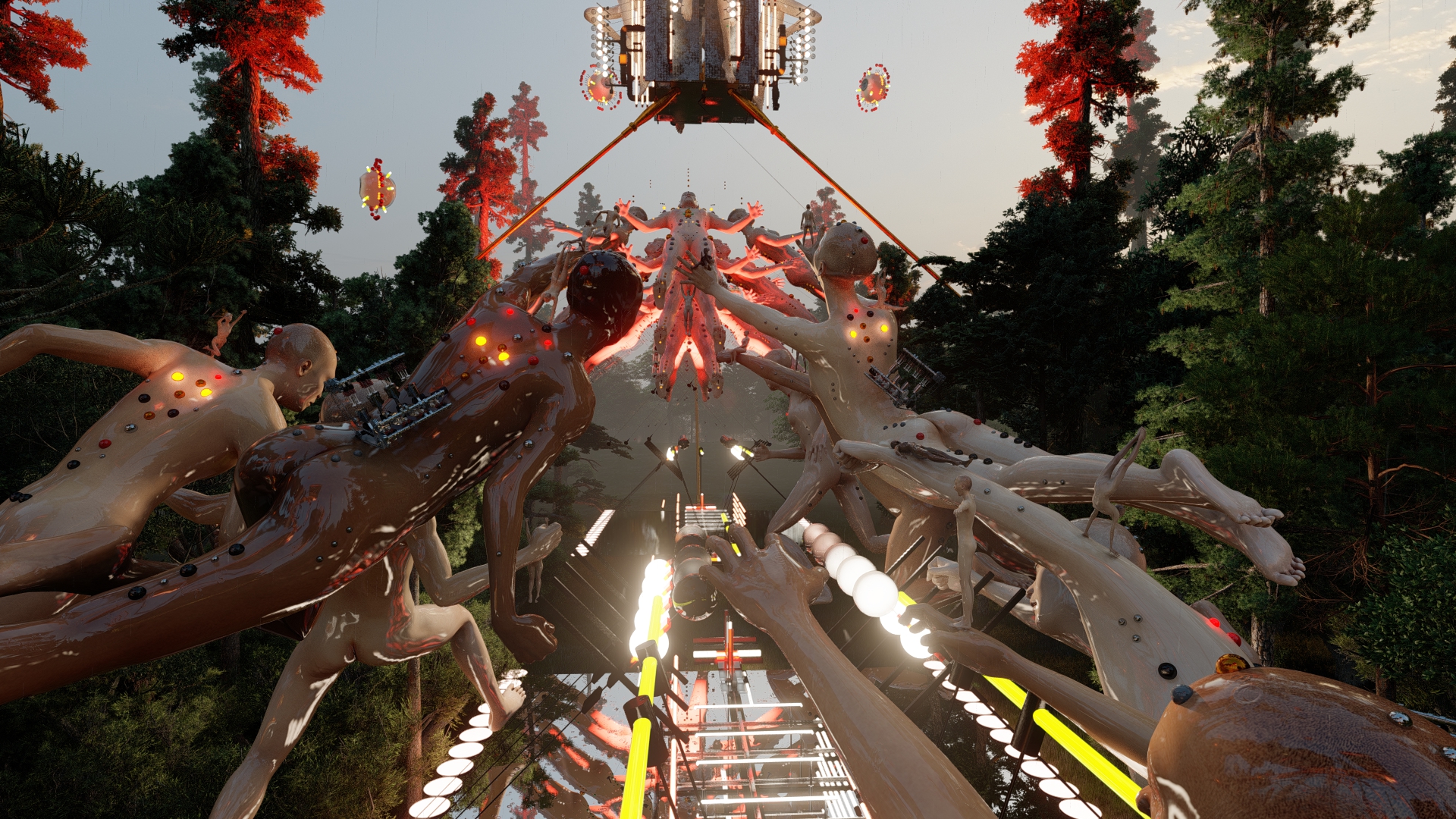
In Gnaw-Body Index, I propose a speculative single-channel video installation that reflects
on the transformation of human, digital, and imagined bodies in the context of contemporary
identity formation. The title itself evokes imagery of erosion and consumption, bodies being
metaphorically worn down over time, whether through social, technological, or biological forces.
The installation asks the central question:
What becomes of human identities in a digital world
where physicality no longer limits us?
There are various parameters involved in forming identity: race, ethnicity, gender, age, sexual orientation, physical attributes, personality, political and religious beliefs, and so on. These have traditionally been tethered to the physical world. But imagine a scenario where those boundaries dissolve. In a digital realm, like a multiplayer game, the limitations of the physical world no longer apply. People can recreate themselves through avatars as anything they can imagine: an otherworldly superbeing, animal, crossbreed, multigender entity, machine, or a combination of all these.
As the virtual world expands and technology advances, the boundaries between digital and physical selves begin to glitch. The more time we spend online, the more these identities bleed into “real life,” resulting in a fluidity between real and imagined worlds. This transformation opens up unprecedented opportunities for people to express themselves in ways that were once unimaginable. The digital space becomes a canvas for creating new identities and shaping utopias—or dystopias—that redefine how we perceive and navigate the world.
In Gnaw-Body Index, these themes are explored through bodies in constant transformation, eroded by the forces of digital life, social expectations, and technological evolution.
What becomes of human identities in a digital world
where physicality no longer limits us?
There are various parameters involved in forming identity: race, ethnicity, gender, age, sexual orientation, physical attributes, personality, political and religious beliefs, and so on. These have traditionally been tethered to the physical world. But imagine a scenario where those boundaries dissolve. In a digital realm, like a multiplayer game, the limitations of the physical world no longer apply. People can recreate themselves through avatars as anything they can imagine: an otherworldly superbeing, animal, crossbreed, multigender entity, machine, or a combination of all these.
As the virtual world expands and technology advances, the boundaries between digital and physical selves begin to glitch. The more time we spend online, the more these identities bleed into “real life,” resulting in a fluidity between real and imagined worlds. This transformation opens up unprecedented opportunities for people to express themselves in ways that were once unimaginable. The digital space becomes a canvas for creating new identities and shaping utopias—or dystopias—that redefine how we perceive and navigate the world.
In Gnaw-Body Index, these themes are explored through bodies in constant transformation, eroded by the forces of digital life, social expectations, and technological evolution.